The Closing of the Joslin Illiniois Tyson Plant
Publication date: 2026/08/16
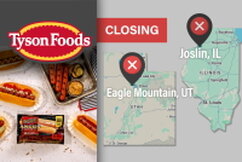
Thursday August 13, 2026 was the last day of work for around 2500 employees at the Joslin Illinois Tyson Beef packing plant. Since 1995 I have passed that plant many times a week. I passed so many times that I knew when the shift changes occurred and when traffic would be quite heavy. That day my wife and I had business to attend to in Davenport Iowa. On the way back to the family house in the next town over, I decided to take a route not by the plant as it may have been a shift change time.
That night I saw the news.
I have worked for companies that managed to mismanage themselves into this position numerous time. In those cases if was over reliance on raw spreadsheet data and not running the company to run but to either sell out or emphasize raw numbers.
In this case, the question is asked, what is the business? Is it the Tyson corporation or is it the Tyson beef processing plant in Joslin Illinois? What truly is the beef cattle situation? Also, did Tyson follow the rules in the abrupt closing of the Joslin plant? Finally, what comes next for all parties involved?
This is not the first time that there has been a fundamental change in the meat packing business. The Chicago stock yards area was the large processing point from the late 1800s until the end of the 1960’s. Plants like the ones in Joslin replaced those in Chicago. Changes in refrigeration, transportation, and the increasing expense of Chicago were listed as the reasons.
While the large commercial meatpacking industry in Chicago was an immigrants first job, the same seemed to true in remote area plants. Immigrant support groups help the new immigrants to the country get jobs in the plants.
The answer to the question of what is the business, based upon history the Tyson corporation is the business. One plant does not make a business, it is the combination of all of the operations.
That said, why Joslin? Why now? According to a Quad Cities Times report In June 2026 Tyson requested tax incentives to modernize the Joslin plant. There was not much detail in the report. Also, I have not found any other media source with this report. But if the report was valid, what changed in less than two months?
It is a common business practice to look at all options until the end. Also, the newspaper is not the general current source of news that it once had been. Now days news is searched out based upon the story which is how I came upon the June detail. The same method also finds other sources to the point. Unfortunately the case here has no collaborating stories to match up.
There is also a change happening in the industry. More direct to the farmer purchases are happening and farmers are starting their own processing operations but on a small scale. In economics there is the theory of diminishing returns. It may be possible we are seeing that the smaller operations are starting to take some of the business? I have talked to restaurant owners over the years and many buy direct from local businesses.
There is a the reduction in the cattle supply. The stated cause is the drought, industry consolidation, prevention of Mexican imports due the New World Screw Worm, delay in rebuilding cattle, and contract pricing. Historically the process of raising cattle is multi tiered with different producers along the way. One producer for the birth then grass fee, then finishing the delivery. The breakdown is that with contract pricing the prices of the individual steps of the process can cause a squeeze on any one of the steps. Since the big four use contract pricing versus auction bid, the quantity of bidders is drastically reduced. The problem with the big four, JBS, Tyson Foods, Cargill, and National Beef, are they are handling 85% of the market. The Packers and Stockyards Act of 1921 was designed to prevent the domination of the then big five meat packers, Armour, Cudahy, Morris, Swift, and Wilson at that time. Anti-trust laws were loosened during the Reagan administration causing re-consolidation of meat products into the big four. This structure has contributed to the shortage.
But the big four cannot exist solely on its own. It is laziness on the part of the buyers that help promote this. These buyers are not just the end consumer. It is the buyers in between that go up the supply chain that generally want to do less to get more. It is human nature. Why go to a cattle auction when you can make a deal. Unfortunately this affects the desire to alter production. We will see if the producers decide to change and step up. The government needs to step in and see if the The Packers and Stockyards Act of 1921 is properly being enforced and if not, breakups need to occur.
Did Tyson follow the rules for the layoffs and plant closure? Illinois law states with the Worker Adjustment and Retraining Notification act of 1988: “Employers must notify affected employees (or their union representatives), the Illinois Department of Commerce and Economic Opportunity, and the chief elected official of each affected municipal and county government. The notice must be provided 60 days before the effective date of the layoff or closing.” Tyson has abided by this as even though production has stopped, employees are compensated and still considered employees of Tyson until October 12, 2026.
It will be necessary that future employers of these employees be fast in their potential work offerings to the soon to be former Tyson employees. Community support will also be needed to help those in transition. If you are an employer with a potential job, be available but also be willing to offer retraining. This is also an opportunity for English language assistance and training. One of my grandmothers never did learn to speak English. It severely limited her. Now is the time for all of us to help those who may be English language challenged. Work together for success. Those who speak it well be tolerant and teach. Those who are challenged, be willing to learn. If anything there will be a whole new world of humor for you to get to know.
The supply side is interesting. Already one of the television news reports has talked to a cattle supplier. The question here is the structure of the contract. Is it strictly to the Joslin plant or is it to Tyson regardless of the plant? If to any Tyson plant, who picks up the additional shipping costs? Will the other smaller packing operations see this as an opportunity to increase their business?
One other thing that I wan to bring up. Why the Joslin Illinois plant? Why also Eagle Mountain, Utah and the selling of the Pasco, Washington plants. Why are Dakota City, Nebraska, Holcomb, Kansas, and Amarillo, Texas retained? Business climate? State laws? Labor Supply? Location to cattle herds? Or is it just the spreadsheet?
I wish the best to all those affected and will see what I can do to help.